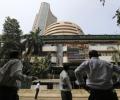
'It is easy to dramatise the events of today, but it is far more important to focus on the fact that we have a radically overvalued financial sector. It is a house of cards.'

Select companies in infra, capital goods, private banks, auto, oil & gas, and mining could be considered by investors.

In yet another move to close the regulatory gap between banks and shadow banks, the Reserve Bank of India (RBI) has mandated exposure limits to the non-banking finance companies, in line with commercial banks. In the large exposure framework released on Tuesday, the regulator capped aggregrate exposure of NBFCs which are in the upper layer toward one entity at 20 per cent of capital base. The limit can only be extended by another 5% with board's approval. For a particular borrower group, the cap is at 25 per cent, with additional 10 per cent if exposure is towards infrastructure.
At least a 25 basis points hike can be expected on the October 5 policy

This is the second extension for the bids since June 18.

Zee Entertainment last week witnessed shareholder activism that saw an open call for the ouster of promoters and the incumbent management led by Punit Goenka. Besides, Dish TV also faced a similar call earlier this month. The trouble at Zee Entertainment can be gauged from the fact that this is a unique company wherein the promoters own just 3.99 per cent, but fully control the firm.

The domestic deal-making activities were hit by weak corporate governance and a huge liquidity crunch in 2019, while the global deals were also hard to come by due to various factors including uncertainties caused by the US-China trade war, which left many investors in a wait-and-watch mode.

Nearly three-fourths of the debt money, as of April 30, 2019, was invested in securities with duration of less than three years.
An NBFC must actively manage its collateral positions, differentiating between encumbered and unencumbered assets, and monitor such assets so that they can be mobilised in a timely manner, central bank says in circular.

In 5 years, the AMC has clocked a growth rate of 40% with its AUM up nearly 4 times.

'The people let off by the NBFCs have little bargaining power and willingly settle for a 20% to 25% cut in their existing salaries when hunting for new jobs.'

Low home loan rates by banks could put large players in an advantageous position over smaller non-bank players, believe analysts.

'The book captures Rana Kapoor's hunger for real estate leading to bungalows in Delhi, Mumbai, London and other cities; the multiple companies -- over 100 -- to fund his family's various ventures; the attempt to game the system by showing lower non-performing assets,' notes Joydeep Ghosh.

For development finance institution to succeed now, the government must stand like a rock behind it and be patient.

Coming down heavily on MF players who in recent past chose to use shareholder fund to buy out debt of bleeding invested companies, Sebi said MFs can't have standstill agreements with companies and will take action against fund houses for such deals.

With a new $100-billion technology fund, SoftBank is likely to go after market leaders.

The regulatory actions, undertaken by the RBI and the government, came hours after finance ministry sources confirmed that SBI was directed to bail out the troubled lender. For the next month, Yes Bank will led by the RBI-appointed administrator Prashant Kumar, an ex-chief financial officer of SBI.

Tamal Bandyopadhyay, columnist and author of several books like From Lehman to Demonetisation: A Decade of Disruptions and Sahara: The Untold Story, tells Rediff.com why Yes Bank depositors should not panic and the current crisis at India's fifth largest private lender does not pose any systemic risk.

Experts say investors should be careful, as even a 50-100 bps cut in rates will not help such companies if their business is not doing well. Check what is the problem and consider

Axis Bank emerged as the biggest gainer in the Sensex pack, surging 6.62 per cent, followed by SBI at 5.88 per cent.

Observing that the economic recovery was not yet fully entrenched, the RBI Governor said recovery is likely to be gradual.

It has been a year since the Reserve Bank of India (RBI) initiated prompt corrective action (PCA), an exercise that puts weak banks under central bank scrutiny, against the 94-year-old Lakshmi Vilas Bank (LVB). But recently, this low-profile Chennai-headquartered bank found itself attracting some unwonted publicity when 60 per cent of its shareholders voted against a proposal to re-appoint seven directors, including one of the promoters, K R Pradeep (who holds around 2 per cent), and the company's managing director & chief executive officer S Sundar.

If net forex outflows turn out to be relatively high in the next few years, the rupee could depreciate beyond Rs 80 to a dollar by 2022. The causal reasons could, for example, include unmet expectations of FPI and FDI investors about the performance of the Indian economy, sharp rise in prices of imported oil and decrease in FX remittances. The RBI has to ask itself whether guaranteeing future rupee-dollar exchange rates on FX forward contracts is a reasonable way to use its risk-bearing capacity, says Jaimini Bhagwati.

Inter-ministerial group to meet on Thursday to finalise model concession pact.

'MFs have a combined exposure of Rs 3.2 lakh crore to NBFCs, out of which Rs 1.1 lakh crore matures by September 2019.'

'The macro-economic stresses -- high interest rates, rupee depreciation and capital flows -- have receded now.' 'Interest rates have come down, inflation is down and the rupee has bounced back.' 'If oil prices continue at this level, there will be no vulnerability.' 'Growth is a different story.'
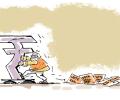
'We have promised to ensure reduced tax rates.'

Higher growth, reform bets have boosted returns but leave limited room for error.

Ajit Mishra, vice president, Research, Religare Broking, answers your stock market queries.

In February 2012, Laundry Project opened its first factory in Chennai. Initially, it catered to hotels - Taj, Oberoi, Marriot, Ascot and Radisson.

The project is awaiting clearances from the DGCA.

Investors cheered a sharp decline in the Current Account Deficit, which stands at a 4 year low as exports picked up and gold imports reduced.
 © 2026 Rediff.com - Advertise with us - Disclaimer - Privacy Policy - Sitemap - Feedback - About us - Terms of use - Grievances